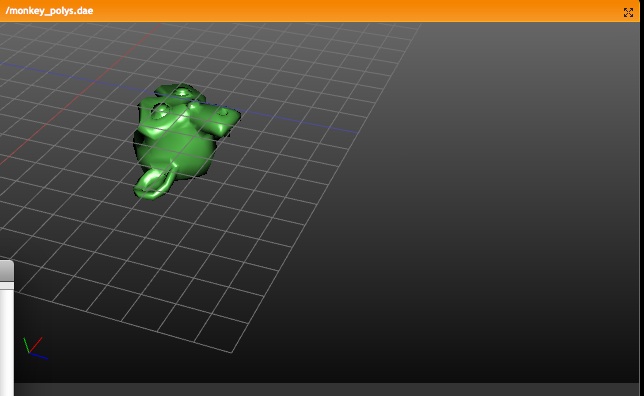
http://www.blender3d.org/cms/New_Particle_options_a.721.0.html

There's no doubt this patch had a lot of good ideas for features, and I
want to compliment Janne again for getting it all to work even!
A more careful review of the features and code did show however quite some
flaws and bugs... partially because the current particle code was very much
polluted already, but also because of the implementation lacked quality.
However, the patch was too good to reject, so I've fixed and recoded the
parts that needed it most. :)

Here's a list of of most evident changes in the patch;

- Guides support recoded. It was implemented as a true 'force field',
  checking all Curve path points for each particle to find the closest. Was
  just far too slow, and didn't support looping or bends well.
  The new implementation is fast (real time) and treats the paths as actual
  trajectory for the particle.
- Guides didn't integrate in the physics/speed system either, was added as
  exception. Now it's integrated and can be combined with other velocities
  or forces
- Use of Fields was slow code in general, made it use a Cache instead.
- The "even" distribution didn't work for Jittered sample patterns.
- The "even" or "vertexgroup" code in the main loops were badly constructed,
  giving too much cpu for a simple task. Instead of going over all faces
  many times, it now only does it once.
  Same part of the code used a lot of temporal unneeded mallocs.
- Use of DerivedMesh or Mesh was confused, didn't work for Subsurfs in all
  cases
- Support for vertex groups was slow, evaluating vertexgroups too often
- When a vertexgroup failed to read, it was wrongly handled (set to zero).
  VertexGroup support now is with a name.
- Split up the too huge build_particle() call in some parts (moving new code)
- The "texture re-timing" option failed for moving Objects. The old code used
  the convention that particles were added with increasing time steps.
  Solved by creating a object Matrix Cache.
  Also: the texture coordinates had to be corrected to become "OrCo".
- The "Disp" option only was used to draw less particles. Changed it to
  actually calculate fewer particles for 3D viewing, but render all still.
  So now it can be used to keep editing realtime.

Removed;

The "speed threshold" and "Tight" features were not copied over. This
resembled too much to feature overkill. Needs re-evaluation.
Also the "Deform" option was not added, I prefer to first check if the
current particle system really works for the Modifier system.

And:

- Added integration for particle force fields in the dependency graph
- Added TAB completion for vertexgroup names!
- Made the 'wait cursor' only appear when particles take more than 0.5 sec
- The particle jitter table order now is randomized too, giving much
  nicer emitting of particles in large faces.
- Vortex field didn't correctly use speed/forces, so it didn't work for
  collisions.
- Triangle distribution was wrong
- Removed ancient bug that applied in a *very* weird way speed and forces.
  (location changes got the half force, speed the full...???)

So much... might have forgotten some notes! :)
DXF: when an error message occurs during read, the main call returned
without clearing the used global vars... causing crash on calling again.

ALso: added warning when trying to assign a taper or bevel using Object
itself. (report from opengl tracker :)
He noted that static particles don't work with force fields yet, and
added a fix for it. This however didn't work for the depgraph yet, and
didn't correct the static particle's local space to world coordinates for
the fields. Nevertheless, while reviewing this small patch I thought it
would be fun to add now.

So: static particles now update realtime on forcefield relations. Warning
for potential slowdowns! Also note that work on the real particle patch
still has to be done... something I really will do, but in time. To get
particles correctly integrated in the animation system, quite some new
development has to be done still.
If a Mesh was "Auto Smooth", it was drawing as smooth in editmode, and
not as smooth in Object mode. Should be consistant.
Better even would be draw autosmooth info, but that's derivedmesh magic now!
1) Stride Bone

For walkcycles, you could already set an NLA strip to cycle over a path
based on a preset distance value. This cycling happens based on a linear
interpolation, with constant speed.
Not all cycles have a constant speed however, like hopping or jumping.
To ensure a perfect slipping-less foot contact, you now can set a Bone
in an Armature to define the stride. This "Stride Bone" then becomes a
sort-of ruler, a conveyor belt, on which the character walks. When using
the NLA "Use Path" option, it then tries to keep the Stride Bone entirely
motionless on the path, by cancelling out its motion (for the entire
Armature). This means that the animation keys for a Stride Bone have to be
exactly negative of the desired path. Only, at choice, the X,Y or Z Ipo
curve is used for this stride.

Examples:

http://www.blender.org/bf/0001_0040.avi
The top armature shows the actual Action, the bottom armature has been
parented to a Path, using the Stride Bone feature.

http://www.blender.org/bf/0001_0080.avi
Here the Stride Bone has a number of children, creating a ruler to be
used as reference while animating.

Test .blend:
http://www.blender.org/bf/motionblender1.blend

Notes:
- Note that action keys for Bones work local, based on the Bone's
  orientation as set in EditMode. Therefore, an Y translation always
  goes in the Bone's direction.
- To be able to get a "solvable" stride, the animation curve has
  to be inverse evaluated, using a Newton Raphson root solver. That
  means you can only create stride curves that keep moving forward, and
  cannot return halfway.
- Set the Stride Bone in the Editing Buttons, Bone Panel. You can set
  change the name or set the axis in the NLA Window, Strip Properties Panel.
- Files in this commit will move to the blender.org release section.

2) Armature Ghosting

In EditButtons, Armature Panel, you can set an armature to draw ghosts.
The number value denotes the amount of frames that have to be drawn extra
(for the active action!) around the current frame.
Ghosts only evaluate its own Pose, executing it's Actions, Constraints and
IK. No external dependencies are re-evaluated for it.

3) NLA/Action time control

If you click in the NLA window on the action (linked to Object), it makes
sure the Timing as drawn in the Action editor is not corrected for NLA.
If you also set the Object to "Action", this timing will be executed on the
Object as well (not NLA time).
(It's a bit confusing... will make a good doc & maybe review UI!)
- Python Drivers
  In Ipo Window "transform properties" Panel, added the buttons, and the
  initial handling (now only printing text). Willian makes it work!

- Better Matrix to Eul, code submitted by Brecht. No time yet to do it
  really nice (like a Mat3ToEulCompat(mat, eul, eulc))
1) Target-less IK

If you add an IK constraint without a target set (no object or bone target),
it now can be grabbed and moved with IK, using its own Bone tip or root as
target itself. This way you can use IK for posing, without having the IK
executed while it animates or while a Pose is being solved for real IK.

After grabbing "Target-less IK", it applies the resulted motion in the
pose-channels, which then can be used to insert keypositions.

The Target-less IK bone can still be rotated without IK, also its chain
can be edited as usual.

UI: The CTRL+I menu gives this as an option too. In the 3D window it is
drawn with orangish color.

Note that IK is not resistant to non-uniform scaling yet.

2) Auto-IK

When the option "Automatic IK" is set, in Edit Buttons Armature Panel,
it creates automatic temporal Target-less IK for the Bone you grab or
translate.

The rules are:

- it only works when a single Bone is selected
- if the Bone is a root bone (no parent), it adds IK to the end of the
  chain(s)
- otherwise it adds the IK to the active Bone
- the temporal IK chain only consists of connected Bones.

This method is still a bit experimental. Maybe it should become a special
grabbing option (like SHIFT+G in Pose Mode). It also only works OK for rigs
that fit for it well... when a rig already is fully setup with IK it can't
do much good. :)
- Action Editor: hotkeys V and H for handles were invisible, added menus
- NLA strips: when current frame is exactly on the strip end, it didn't
  include that action... needs a rounding correction for it.
- Action/NLA: deleting keys in Action, which results in only 1 key left,
  resulted in zero sized strip length. Now the strips are defaulted to be
  1 frame in size minimal.
- NLA editor: ALT+C "Convert to strip" didn't increment Action user count
- 3D Window: CTRL+P make parent to Bone still gave the insane menu with all
  bone names. With unified PoseMode select it can just parent to the
  active Bone. Note; this now requires the Armature to be in PoseMode to
  work.
- Rotation Constraint; the new options to only map to X,Y,Z rotation, did
  set the not mapped rotation axes to zero. These should remain unchanged.
- AutoKey optionn for Actions; should not insert action keys on ESC

And added a fix myself:

- When SHIFT+selecting a Bone in PoseMode, and the Armature was not selected
  or active yet, it doesn't extend-select/deselect the Bone anymore.
  This case is only useful when you try to add IK or Constraint, so the
  shift+selection should only activate the clicked Bone.
NOTE: I had to fix NMesh.c, Mesh_fromNMesh(), that is a real bad
function... it was returning a Py object as a Mesh (on error).
This is still not really solved (NULL return is not handled).
It works like for moving Object Ipos to the Action, press the Action icon
in the header of the IpoWindow, to the left of the mode selection menu.
It then creates an Action (if not existed) and moves the Shape Ipo to the
Action, using custom channel "Shape".

Main code change was that evaluating Ipo Curves for Relative Shapes had to
be recoded, but that's pretty minor and even much cleaner. (added "curval"
in the KeyBlock struct).
That this feature can work is thanks to the full modifier/derivedmesh
recode Daniel did, can't give him enough credits! :)

Also; small fixes in Outliner, for clicking on the Ipo icon (sets the Ipo
window to show that Ipo).
* Made the in-camera view dashed border lines less jarring
and disturbing. We will give it some testing here, feedback
is welcome.
* Showing the title safe zone is now an option in the
camera edit buttons. It's not very useful if you're not
making stuff for video/broadcast so you can turn it off.
* Passepartout is now a flag per camera, rather than per
scene. It never really belonged in the render buttons or as
Scene data, though it could be up for debate whether it's
better as camera data or view data (i.e. in the view
properties panel). Old files get converted over nicely with
this so if you had passepartout on before, it stays on the
cameras.
* Added an option to show the current camera's name at
the bottom of the in-camera view, to help keep track of
which one you're seeing when using multiple cameras.
* In the 3D View (non-camera view) the active camera is
drawn with a solid line as before, while non-active
cameras are drawn with a dashed line, to help visualise
which one is active.
When Modifiers are used in Edit Mode to show the deformed result for
editing, all actual coordinates Blender works with are still the ones from
the original Cage. You can notice that with the Transform Widget or
helper lines while transforming.

Even worse, the actual transformations still happened on the original Cage
as well, making it very hard to edit. That caused the feature to be named
"CrazySpace" (baptized by Andy, afaik?).

This commit calculates the deformation transformation per vertex, and
inverse corrects it, so it's more intuitive editing this way.

Unfortunately all the deformation features of Blender don't use matrices
for defining deform, so the existing code cannot be re-used to retrieve
the correct deformation matrix per vertex. The solution I found is based
on calculating per face the transformation based on its first 3 vertices,
and store this transformation averaged in the face's vertices.
The solution can also only work on entire faces, because the full deform
can only be retrieved using 3 vertices. (using 2 vertices will miss edge-
aligned rotation, using 1 vertex can only retrieve translation).

By deriving the deformations per face, small errors will still happen,
especially on very low-poly Meshes with extreme deformations.

The only alternative I know now, is providing each vertex in
a mesh with 2 extreme small tangent vectors, which get deformed using the
existing code as well. That will mess up the existing deformation code too
much though, this solution has the benefit it works with each deform we can
up with later too.

Last note about CrazySpace: it can only be used to tweak Meshes. Do not
even try to add vertices, extrude, or duplicate. Probably we should disable
this... but preventing user errors isn't always power-user-friendly, eh. :)
- removed euler branch in favor for a 'better solver to come'
- removed some debug vars from lattices
- removed some garbage related to 'borrowing' collision from particles
note SB collision is completly decoupled from particle stuff to allow
: 1. SB collision targets can be 'anything evaluated by modifier stack' but won't be subsurfed (for performace reasons / possible though / see comment in code)
: 2. SB <-> SB collisions
: 3. ( 1. implies that SB collision targets may be animated, hooked,  curve deformed ,  .. ! )
DAG_object_flush_update() always used scene layers, causing updates to go
wrong with 3d windows with "Lock" off (allowing local layer and camera).

This fixes a larger amount of potential issues.

Also: fixed menu title for adding IK constraint to Bone (CTRL+I).
In PoseMode, press Wkey or use the Pose pulldown menu. It calculates the
positions of all selected Bone end points, over the time as indicated with
the Scene start/end frame. This then is drawn as a path, with little black
dots on every frame, and a white dot on every 10 frames.

Paths are not saved in files, and not calculated automatic yet on changes.

To make this relative fast, but also reliable, I had to add a new method
in the Dependency graph system, to find exactly (and only) these parents
of an Object that influence its position. This is needed because the path
should show the actual global coordinates of the entire animation system.
- Added (BKE_utildefines.h) POINTER_TO_INT(poin) and INT_TO_POINTER(int)
  defines, to help fixing issues with switch to 64 bits systems. This
  assumes that a) not more than 16GB mem is used and b) that address
  space is below the 1<<35 value. The latter has to be confirmed, but it
  seems to conform the current 64 bits generation of OSs (for mallocs).

  Needless to say; use long if you want to store pointers! This is for
  temporal fixing.

- Added editmesh version for mesh-octree lookups, not used yet.

- Fix: ESC on armature posemode restored the actions, should not happen

- Fix: If in NLA an action was 0 frame long, it caused draw error

- Fix: Click on name in Action Window now activates Bones

- Fix: "Snap to" options in Armature editmode now use X-axis mirror edit.
- Set the button in Paint Panel, Edit buttons context
- It assumes the mesh to be near-perfectly mirrored. Current threshold is
  set to 0.0001 (maximum difference allowed).
  In order to evaluate proper mirroring, a new option will be added in
  Mesh editmode later.
- When the flipped group doesn't exist yet, it creates the group
- Of course this doesn't work for mirror modifier!

New: Select/activate flipped bone or vertex group
- Press SHIFT+F in PoseMode or WeightPaint mode to get the flipped bone.
  Is especially to see while painting if the mirror copying works OK.

New: "Apply Envelope to VertexGroup" uses X-mirror option too.

Todo; check on mirror vertex painting, and mirror Mesh editmode....

The implementation is based on a 8x8x8 Octree, where vertex locations are
stored. Vertices on the threshold boundary of an Octree node are filled in
the neighbour nodes as well, ensuring that the lookup works with threshold.
The current size of the Octree gives good speedup, even for 128k vertices
it only needs 256 lookup cycles per checked vertex.
Same code could be used for the bevel tool for example.

src/meshtools.c:
int mesh_octree_table(Object *ob, float *co, char mode)

- mode 's' or 'e' is "start octree" or "end octree"
- mode 'u' is "use", it then returns an index nr of the found vertex.
  (return -1 if not found)
-symtom: looks like rigged SB mesh follows weird goal settings
-cause: arbitary initialisation of 'edge spring rest length' ... must have happend by introducing 'modifyer stacK'
The rotation of the parent of the root in an IK chain was included
in the segment's basis, leading to the DoF / rotation limits to be
computed on the wrong basis.
to finetune deform further as well.
Note that curve deform requires object buttons 'track' and 'up' axes set
properly. Curve deform can twist/flip a lot, making Vertex Group based
deform hard to set up.
The "Use VGroup" or "Use Envelope" options now are in Modifier Panel
for Armature deform.
If Modifiers are in use, they override the Armature settings for it.
(Cannot get rid of the Armature panel options yet, since Blender still
allows parenting to be deforming too, which is displayed as a Virtual
modifier now)

This now allows to - for example - make a Envelope deform on a Lattice,
and have same Armature use vertexgroups on Mesh.

Next; vertexgroup option for Lattice & Curve deform
Fixed bugreport on crashing vertex duplicators in editmode. Apparently it
was not coded with new mesh/modifier support. And now it does, quite fun!

One day picture for quick people:
http://www.blender.org/bf/rt.jpg

Daniel; could you check the commit diff below?
it and reload. I could fix the crash quickly, but it still gives not freed
memory errors.

More important; this code is VERY BAD! Not sure who added all this *goto*
stuff, but it's not acceptable code that way... (kernel, font.c)

The hacks in editfont.c are very bad too. I really hope Alexander and/or
Mika will clean up before we officially release!
- test build alpha splash
- version update to 239 in code
- release names are 2.40-alpha1

Note about release names; this is really an alpha still, not a release
candidate, so cannot call it 2.40-pre either.
Naming conventions is a discussion still... hope this works as a compromise
for now.